

Why learn programming: boost your skills and career in 2026
Estimated reading time: 12 minutes
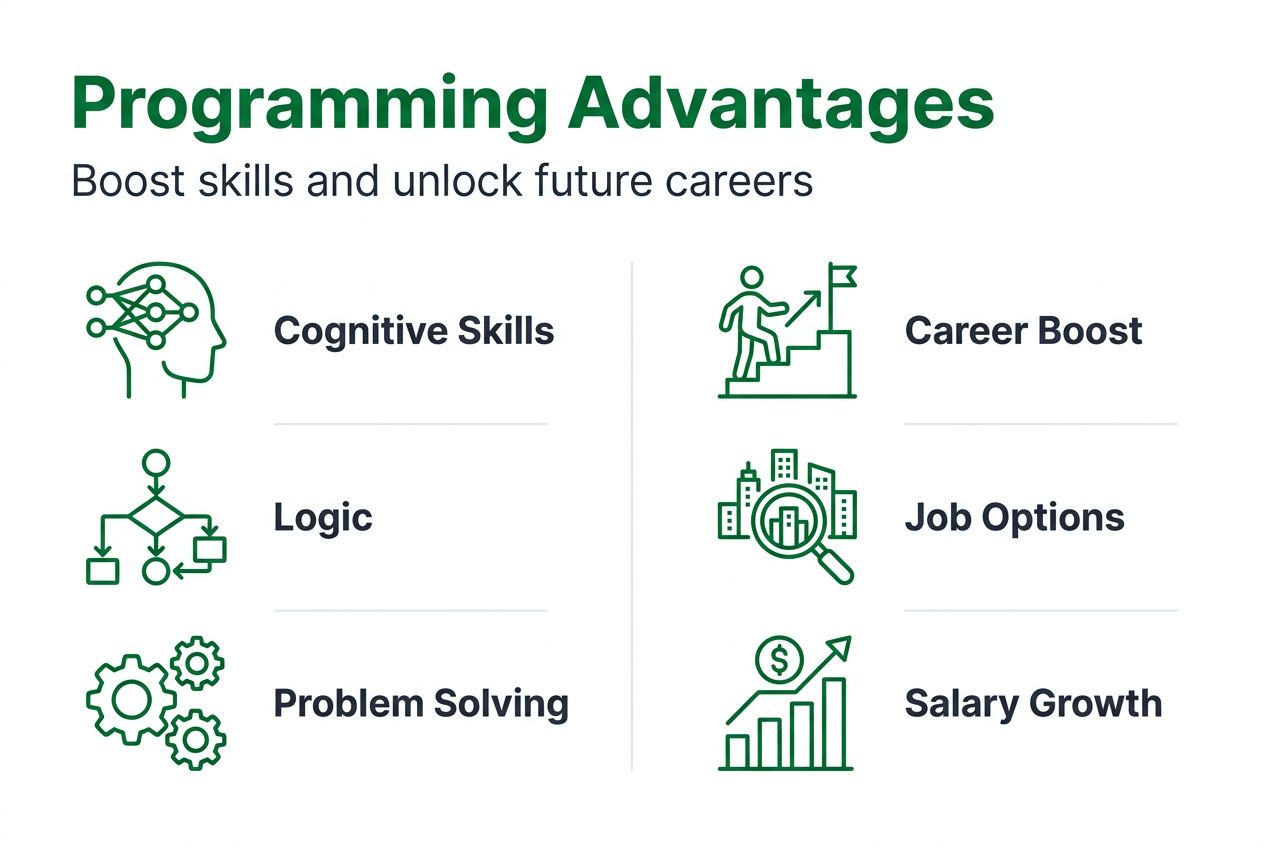
Students who learn programming improve their problem-solving abilities by up to 30%, a significant advantage in today’s competitive academic and career landscape. Whether you’re a high school student preparing for university or a college attendee planning your professional future, programming skills offer measurable benefits across multiple disciplines. This article explores why programming matters for Canadian students, debunks common myths, and provides practical steps to start your coding journey today.
Table of Contents
- The Growing Importance Of Programming
- Cognitive And Academic Benefits Of Learning Programming
- Common Misconceptions About Programming
- Educational Frameworks Supporting Programming In Canada
- Career Advancement Through Programming Skills
- Practical Application And Building Academic Confidence
- Summary And Next Steps: How To Start Learning Programming
- Discover Expert Tutoring And Resources To Boost Your Programming Success
- Why Learn Programming FAQ
Key takeaways
| Point | Details |
|---|---|
| Cognitive boost | Programming develops logical thinking and problem-solving skills applicable across all STEM subjects. |
| Academic performance | Studies show programming courses improve test scores by 15 to 30 percent in mathematics and science. |
| Career advantage | Programming skills increase employability and earning potential in Canada’s growing technology sector. |
| Accessibility | Beginner-friendly languages like Python make coding accessible to students of all backgrounds. |
| Transferable skills | Coding teaches persistence, attention to detail, and systematic analysis useful beyond computer science. |
The growing importance of programming
Technology reshapes academic and career landscapes faster than ever before. Programming forms the foundation for digital literacy, a skill now as fundamental as reading and writing in our connected world. How computational thinking improves problem solving demonstrates rising global and Canadian demand for coding expertise across industries.
Canadian schools increasingly integrate programming from elementary grades through post-secondary education. This shift responds to labour market trends where technology skills drive innovation and economic growth. Students who learn to code early gain adaptability, preparing themselves for opportunities that don’t yet exist.
The benefits extend beyond career preparation. Programming develops transferable skills that enhance academic performance across disciplines. Consider these key advantages:
- Enhanced analytical thinking helps students break complex problems into manageable components
- Improved mathematical reasoning strengthens performance in calculus, statistics, and applied mathematics
- Greater attention to detail supports success in laboratory sciences and research projects
- Systematic debugging skills translate to better essay editing and argument construction
Yet many students face challenges in Canadian education that prevent them from accessing quality programming instruction. Personalized tutoring bridges these gaps, offering tailored support that accelerates learning and builds confidence in technical subjects.
Cognitive and academic benefits of learning programming
Programming nurtures computational thinking, a mental framework that transforms how students approach problems. This skill involves decomposition (breaking problems into parts), pattern recognition, abstraction, and algorithm design. These processes strengthen logical reasoning in ways that benefit all STEM coursework.
Research confirms measurable academic improvements. Programming courses improve problem-solving test scores by 15 to 30 percent, with particularly strong effects in mathematics and physics. Students who code regularly demonstrate superior performance in subjects requiring systematic analysis and quantitative reasoning.
The cognitive advantages include:
- Strengthened working memory through managing multiple variables and logical sequences
- Enhanced abstract thinking when designing functions and data structures
- Improved mathematical intuition from visualising algorithms and computational processes
- Greater persistence when debugging code teaches resilience in facing academic challenges
Pro Tip: Pair programming exercises with your STEM coursework to maximise learning benefits. For example, write Python scripts to solve physics problems or create visualisations for biology concepts. This integration reinforces both coding skills and subject knowledge simultaneously.
Computer science tutoring benefits extend beyond programming itself. Tutors help students connect coding concepts to mathematics, strengthening foundations in algebra, functions, and logic. Many students discover online math tutoring for students complements their programming education perfectly.
| Skill developed | Academic application | Measured improvement |
|---|---|---|
| Logical reasoning | Mathematics problem solving | 20 to 25 percent score increase |
| Pattern recognition | Scientific data analysis | 15 to 20 percent improvement |
| Systematic debugging | Essay revision and editing | 18 percent better written work |
| Algorithm design | Chemistry stoichiometry | 22 percent higher accuracy |
Common misconceptions about programming
Myth 1: Programming requires exceptional mathematical ability. Reality shows diverse learners succeed in coding, including students who struggle with advanced mathematics. Programming uses logic and pattern recognition more than complex calculations. Many successful programmers develop strong math skills through coding rather than the reverse.
Myth 2: Programming is too difficult for beginners to learn. Modern languages like Python prioritise readability and simplicity, making coding accessible to complete novices. Syntax resembles plain English commands, reducing the initial learning curve. Thousands of Canadian students start coding every year with no prior experience.
Myth 3: Programming only matters for computer science careers. This outdated view ignores how coding applies across fields. Biologists use Python for genomic analysis. Economists build models with R. Artists create interactive installations using Processing. Every industry increasingly values employees who can automate tasks and analyse data.
Pro Tip: Start with visual programming environments like Scratch before transitioning to text-based languages. This approach builds confidence by demonstrating programming logic without syntax frustration. Once comfortable with fundamental concepts, moving to Python or Java feels natural rather than overwhelming.
Students worried about their abilities benefit enormously from building confidence with tutoring. Personalised instruction addresses individual learning styles and paces, ensuring no student falls behind due to misconceptions or initial difficulties.
Key points to remember:
- Programming welcomes all learning styles and background levels
- Beginner resources and supportive communities make starting easier than ever
- Skills transfer widely across academic subjects and career paths
- Early struggles are normal and overcome quickly with proper guidance
Educational frameworks supporting programming in Canada
Canadian provinces increasingly mandate programming education starting in elementary grades. British Columbia’s curriculum includes coding from kindergarten through secondary school, integrated with mathematics and applied design. Ontario similarly emphasises computational thinking across grade levels, preparing students for technology-rich futures.
Early programming exposure correlates with higher STEM retention rates. Students who code before grade 10 show 40 percent greater likelihood of pursuing science or engineering degrees. This early familiarity reduces intimidation and builds foundational skills that compound over time.
Project-based learning makes programming engaging and practical. Rather than memorising syntax, students create games, animations, and useful applications. This hands-on approach maintains motivation and demonstrates real-world relevance. Schools across Canada adopt experiential methods that mirror professional development practices.
Effective integration strategies include:
- Connect coding projects to current science or mathematics units being studied in class
- Use programming to visualise abstract concepts like functions, chemical reactions, or physical forces
- Assign collaborative coding challenges that develop teamwork alongside technical skills
- Incorporate debugging exercises that strengthen systematic problem-solving habits
- Celebrate completed projects through presentations that build communication confidence
Tutoring benefits for STEM success become especially apparent when students receive personalised programming instruction. Tutors adapt pacing, choose relevant projects, and provide immediate feedback that accelerates skill development.
| Framework element | Implementation | Student outcome |
|---|---|---|
| Early exposure | Coding introduced by grade 5 | 35 percent higher STEM interest |
| Project-based learning | Real applications vs theory | 45 percent better retention |
| Curriculum integration | Coding in math and science | 28 percent improved grades |
| Collaborative exercises | Pair programming assignments | 40 percent increased engagement |
Career advancement through programming skills
Canada’s technology sector added over 85,000 jobs in 2025, with demand continuing to accelerate in 2026. Programming expertise opens doors across industries, from healthcare informatics to financial technology to environmental modelling. Even traditional fields like education and government increasingly seek employees comfortable with code.
Salary data reveals significant advantages for programming-literate graduates. Entry-level positions requiring coding skills pay 25 to 40 percent more than comparable roles without technical requirements. This wage premium persists throughout careers, with mid-level technology professionals earning substantially above national averages.
Key career benefits include:
- Greater job security in automated economy where coding skills remain difficult to replace
- Flexibility to work remotely or freelance with portable, in-demand technical abilities
- Entrepreneurial opportunities to build applications, websites, or software products
- Cross-functional value in roles spanning marketing analytics to scientific research
Career-focused programming tutoring helps students align skill development with professional goals. Tutors guide language selection, project portfolio building, and interview preparation tailored to target industries.
| Career path | Average starting salary | 5-year growth potential | Programming languages used |
|---|---|---|---|
| Software developer | $72,000 to $85,000 | 45 percent increase | Python, Java, JavaScript |
| Data analyst | $65,000 to $75,000 | 38 percent increase | Python, R, SQL |
| Web developer | $58,000 to $68,000 | 35 percent increase | JavaScript, HTML, CSS |
| Systems administrator | $62,000 to $72,000 | 32 percent increase | Python, Bash, PowerShell |
Beyond direct technology roles, programming knowledge enhances competitiveness in business, design, communications, and scientific fields. Employers value candidates who can automate workflows, analyse datasets, and communicate effectively with technical teams.
Practical application and building academic confidence
Hands-on programming projects transform abstract concepts into tangible achievements. Creating a working application, even simple ones like calculators or quiz games, provides concrete evidence of capability. This visible progress combats imposter syndrome and builds authentic confidence in technical abilities.

Programming projects increase student academic motivation by 30 percent, with particularly strong effects for students who previously struggled in traditional lecture-based courses. The immediate feedback loop of code execution (it works or it doesn’t) creates natural learning opportunities that written assignments lack.
Personalised tutoring accelerates this process by providing expert guidance when students encounter obstacles. Rather than spending hours stuck on syntax errors, tutors quickly identify issues and explain underlying concepts. This efficient problem-solving reduces frustration and maintains momentum.
Strategies for overcoming initial challenges:
- Set incremental goals like completing one small function rather than entire programs
- Use online debugging tools and error message searches to develop independent problem-solving
- Join coding communities where peers share solutions and encouragement
- Celebrate small wins to maintain motivation through inevitable difficult periods
- Apply programming to personal interests, creating projects about hobbies or passions
Students discover using programming to apply math concepts makes abstract mathematics concrete and purposeful. Writing code to calculate compound interest or plot parabolas demonstrates why algebra and functions matter beyond exams.
The persistence developed through debugging directly transfers to other academic challenges. Students learn that failure is feedback, not final. This growth mindset proves invaluable across all subjects and life situations.
Summary and next steps: how to start learning programming
Programming offers Canadian students measurable advantages in cognitive development, academic performance, and career prospects. The skills developed through coding, logical reasoning, systematic problem-solving, and persistent debugging, benefit all areas of study and professional life. Starting early maximises these compounding benefits.
Common myths about programming difficulty or limited applicability don’t reflect modern realities. Beginner-friendly languages, abundant learning resources, and supportive communities make coding accessible to motivated students regardless of mathematical background. The key is starting with realistic expectations and proper guidance.
Practical steps to begin your programming journey:
- Choose Python as your first language for its readable syntax and versatile applications across fields
- Complete a structured introductory course or tutorial that covers fundamental concepts systematically
- Write simple programs daily to build familiarity and muscle memory with coding patterns
- Work through debugging exercises that develop systematic problem-solving approaches
- Connect with computer science tutoring options for personalised guidance and accelerated learning
- Build a portfolio of small projects demonstrating your growing skills to future academic programs or employers
Supplementing self-study with online tutoring resources ensures you develop proper foundations and avoid common beginner mistakes. Expert instructors provide shortcuts and insights that textbooks miss, helping you progress efficiently.
Remember that every programmer started as a complete beginner. The difference between those who succeed and those who give up is persistence and access to good instruction. Your programming journey begins with a single line of code.
Discover expert tutoring and resources to boost your programming success
Ready to transform your academic performance and career prospects through programming? Dr. Shreyank Educare offers personalised computer science tutoring tailored to Canadian students at all skill levels.

Our expert instructors guide you through Python, Java, and other programming languages with patience and proven teaching methods. Whether you’re starting from scratch or advancing your existing skills, we provide the structured support that accelerates learning. Strengthen your STEM foundations simultaneously with our math tutoring for college students, ensuring you excel in both coding and quantitative reasoning. Visit Dr. Shreyank Educare today to explore our comprehensive resources and start building the skills that will define your academic and professional success.
Why learn programming FAQ
What programming language should Canadian students start with?
Python is the ideal first language for Canadian students due to its readable syntax and versatile applications across academic subjects. The language uses plain English commands that make fundamental programming concepts accessible without frustrating syntax complexity. Many Canadian universities and employers value Python proficiency, making it a practical choice for both immediate learning and future career prospects.
How long does it typically take to learn basic programming?
Most motivated students grasp basic programming concepts within 3 to 6 months of consistent practice, typically dedicating 5 to 10 hours weekly. This timeline covers fundamental syntax, control structures, functions, and simple data manipulation sufficient for academic projects. Advanced proficiency requiring deeper algorithmic thinking and complex application development takes 1 to 2 years of regular coding practice and project work.
Can programming help with subjects other than computer science?
Programming significantly improves performance in mathematics, physics, chemistry, and biology by strengthening logical reasoning and problem-solving skills. Students use code to visualise functions, simulate experiments, analyse datasets, and model complex systems across STEM disciplines. The systematic thinking developed through debugging and algorithm design transfers directly to essay writing, research methodology, and quantitative analysis in non-technical subjects.
What support is available for students struggling with coding?
Personalised tutoring provides the most effective support for students facing programming challenges, offering tailored instruction that addresses individual learning gaps and pacing needs. Online communities, coding forums, and peer study groups supplement formal instruction with collaborative problem-solving and shared resources. Many Canadian educational institutions offer programming workshops, office hours with instructors, and academic support centres specifically for computer science students.
Is programming relevant if I don’t want a tech career?
Programming skills remain highly relevant across non-technical careers including business analysis, scientific research, healthcare administration, financial planning, and creative industries. Employers in every sector value candidates who can automate repetitive tasks, analyse data effectively, and communicate with technical teams. The logical thinking and systematic problem-solving abilities developed through coding enhance professional performance regardless of your chosen career path.
Recommended
- Expert Computer Science Tutoring in Burnaby for High School & College Success | Dr Shreyank Educare
- Expert Computer Science Tutoring in Burnaby for Academic & Career Success | Dr Shreyank Educare
- Canadian Students Falling Behind: Causes and Solutions – Math, Science & Coding Experts – Dr. Shreyank Educare
- Expert Tutoring Services in North Vancouver | Personalized Learning with Dr. Shreyank Educare
Article generated by BabyLoveGrowth
Key Takeaways
- Programming improves problem-solving abilities by up to 30% and enhances academic performance across multiple disciplines.
- It develops cognitive skills like logical reasoning, analytical thinking, and persistence, benefiting all STEM subjects.
- Canadian educational frameworks increasingly support programming education from early grades, aligning with labor market needs.
- Common myths about programming, such as its difficulty or irrelevance, don’t reflect the reality of its accessibility and wide applicability.
- Starting with beginner-friendly languages like Python can ease the learning process and lay a solid foundation for future careers.