
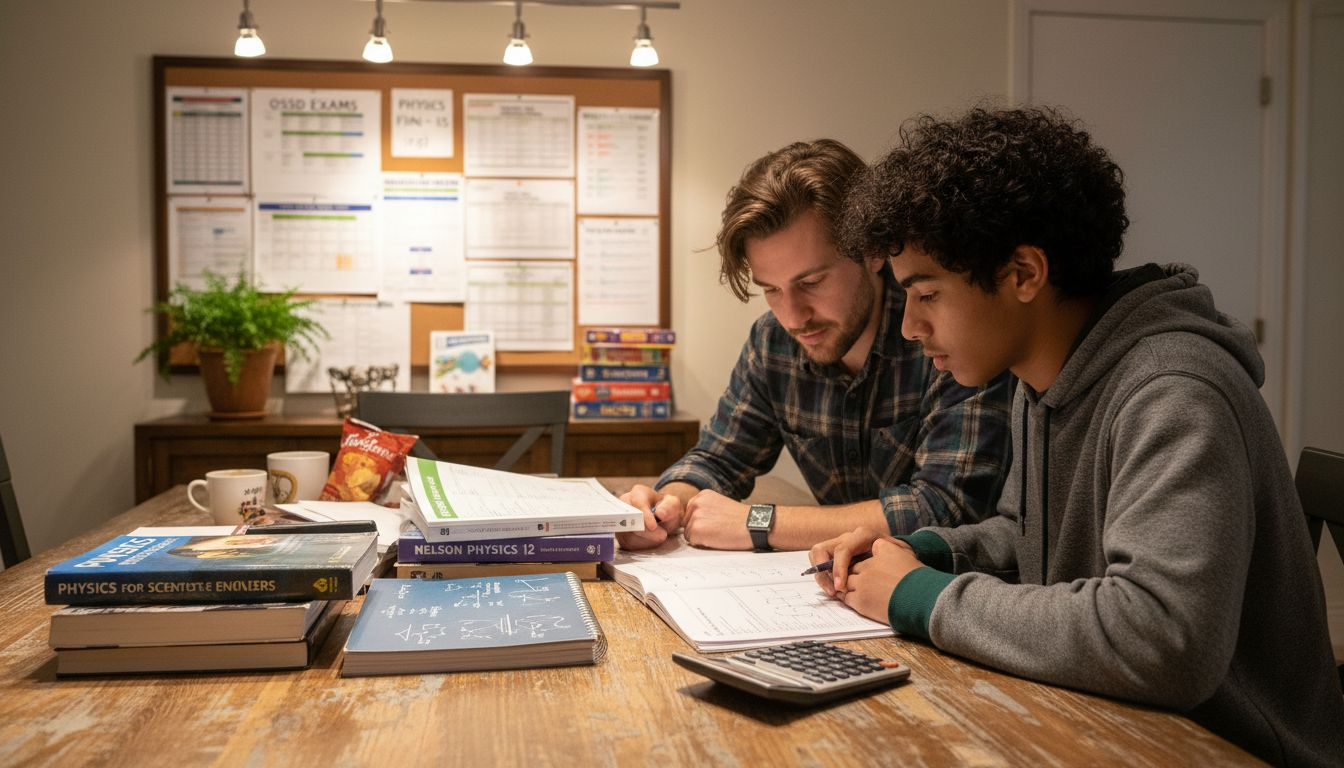
Types of physics tutoring in Canada: choose what suits you
Estimated reading time: 14 minutes
Types of physics tutoring in Canada: choose what suits you
Picking the right physics tutoring can feel overwhelming when you’re faced with online sessions, in-person coaching, group classes, and specialised exam prep. Each option offers distinct benefits, but matching your learning style, budget, and academic goals to the right format makes all the difference. This guide breaks down tutoring types so you can confidently select what truly fits your needs and accelerates your physics success.
Table of Contents
- How To Choose The Right Physics Tutoring: Key Selection Criteria
- Online Physics Tutoring: Convenience And Resource Diversity
- In-Person Physics Tutoring: Personalised Attention And Engagement
- Group Physics Tutoring: Cost-Effective Learning With Peer Interaction
- Specialised Physics Tutoring: Exam Prep And Advanced Topics
- Comparison Of Physics Tutoring Types: Pros, Cons, And Use Cases
- Situational Recommendations: Choosing The Best Physics Tutoring For You
- Explore Expert Physics Tutoring Options With Dr. Shreyank Educare
Key takeaways
| Point | Details |
|---|---|
| Tutor qualifications matter | Credentials, experience, and curriculum knowledge directly impact learning effectiveness. |
| Online tutoring offers flexibility | Digital platforms provide convenience and resources but may reduce real-time interaction. |
| In-person tutoring delivers personalised focus | Face-to-face sessions enable tailored support with higher costs and location constraints. |
| Group tutoring reduces expenses | Collaborative learning cuts costs yet offers less customisation than private sessions. |
| Specialised tutoring targets exams | Focused prep for AP, IB, or advanced topics boosts pass rates and deepens subject mastery. |
How to choose the right physics tutoring: key selection criteria
Before diving into specific tutoring formats, you need a clear framework for evaluating your options. Several critical factors determine whether a tutoring arrangement will truly accelerate your physics progress or leave you frustrated.
Tutor qualifications and expertise form the foundation of effective teaching. Look for certifications in physics or education, teaching experience at your grade level, and demonstrated success helping students master challenging concepts. A tutor who understands your curriculum inside out can anticipate common sticking points and address them proactively.
Delivery mode shapes your entire learning experience. Online tutoring offers location independence and access to a broader pool of instructors. In-person sessions enable hands-on demonstrations and immediate clarification. Hybrid models blend both approaches, giving you flexibility without sacrificing personal connection.
Session format determines how personalised your learning becomes:
- One-on-one tutoring adapts pace and content to your specific gaps
- Group sessions foster peer collaboration but follow a collective rhythm
- Semi-private arrangements balance personalisation with modest cost savings
Cost considerations affect both affordability and session frequency. Online options typically run cheaper than in-person coaching. Group formats reduce per-student expenses significantly. Weigh the price against potential grade improvements and long-term academic confidence.
Scheduling flexibility and customisation capacity influence consistency. Rigid timetables clash with extracurricular commitments, sports, or part-time work. Tutors who tailor lesson plans to your syllabus, exam timeline, and learning speed deliver better results than generic programmes.
Pro Tip: Verify that your tutor knows your specific curriculum and exam requirements. A tutor familiar with British Columbia Grade 12 Physics or Ontario’s curriculum can target exactly what you’ll face on tests, saving you time and boosting scores faster.
Online physics tutoring: convenience and resource diversity
Online physics tutoring has transformed how Canadian students access expert help, especially as online physics tutoring popularity surged by over 40% between 2020 and 2025. This growth reflects students’ appetite for flexible, technology-driven learning that fits busy schedules.
Flexible scheduling stands out as online tutoring’s biggest advantage. You can book sessions around hockey practice, part-time jobs, or family commitments without commuting. Living in rural Alberta or northern Ontario no longer limits your tutor choices. You access top instructors across Canada from your kitchen table.
Digital resources enrich online sessions in ways traditional tutoring can’t match. Interactive simulations let you visualise electromagnetic fields or projectile motion in real time. Shared digital whiteboards enable collaborative problem-solving. Recorded sessions allow you to review tricky derivations at your own pace.
Cost savings make online tutoring accessible to more families. Without commute time or facility overhead, tutors often charge less per hour. You save on transport costs and time, redirecting those resources toward additional sessions or study materials.
Online tutoring suits self-motivated learners who thrive with digital tools. If you’re comfortable navigating video platforms, managing your own notes, and staying focused without face-to-face accountability, online sessions work brilliantly. Students preparing for university who already use online learning platforms transition seamlessly.
Drawbacks include reduced immediate feedback and hands-on approaches. Troubleshooting experimental setups or manipulating physical models becomes harder through a screen. Some students struggle to stay engaged without the presence of a tutor in the room. Internet connectivity issues can disrupt flow, especially in remote areas.
Best candidates for online tutoring:
- Students comfortable with technology and video conferencing
- Learners needing flexible scheduling due to extracurriculars or work
- Those living in areas with limited local tutor availability
- Self-directed individuals who stay focused independently
In-person physics tutoring: personalised attention and engagement
Traditional face-to-face tutoring remains the gold standard for students who need direct interaction and immediate support. Research shows in-person tutoring yields higher average test score improvements through customised support and real-time feedback that adapts instantly to student reactions.
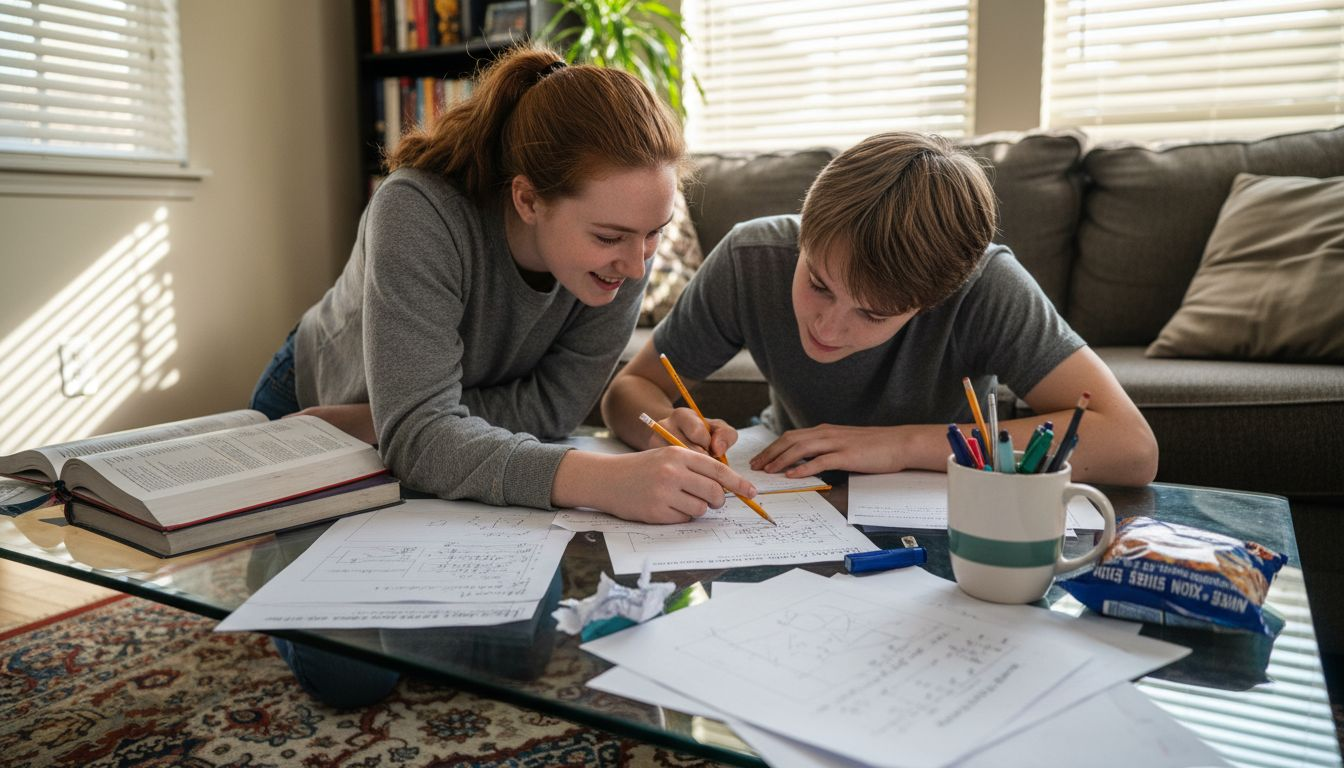
Focused one-on-one attention tailors every session to your strengths and weaknesses. Your tutor reads your body language, catches confusion immediately, and adjusts explanations on the fly. This dynamic responsiveness helps you grasp concepts faster than pre-programmed lessons ever could.
Real-time interactive feedback transforms problem-solving. When you work through a kinematics problem and make an error, your tutor spots it instantly and guides you back on track. This immediate correction prevents you from practising mistakes and builds correct habits from the start.
Hands-on demonstrations bring abstract physics concepts to life. Your tutor can physically demonstrate momentum conservation with marbles, show you how to set up circuits, or walk you through lab techniques that screens can’t replicate. This tactile learning cements understanding in ways visual aids alone cannot.
Expenses run higher for in-person tutoring. You pay for the tutor’s travel time or facility costs, and rates typically exceed online alternatives by 20 to 40 percent. Geographic limitations narrow your tutor pool, especially in smaller towns where specialised physics instructors are scarce.
Commute time adds another constraint. Both you and your tutor must coordinate travel, which reduces scheduling flexibility. Evening sessions mean heading out after a full school day, which can feel draining.
Ideal candidates include students who:
- Benefit from direct engagement and non-verbal communication
- Struggle to focus in digital environments
- Need hands-on demonstrations for experimental or lab-based topics
- Prefer immediate question clarification without technology barriers
Pro Tip: Look for tutors who offer flexible scheduling and blend in hybrid options. Some instructors provide in-person sessions for complex topics and switch to online for routine practice, giving you the best of both worlds while managing costs.
Group physics tutoring: cost-effective learning with peer interaction
Group tutoring delivers a budget-friendly alternative that harnesses peer collaboration to keep you motivated and engaged. Studies indicate group tutoring reduces costs by approximately 50% compared to private sessions while fostering peer motivation and collaboration.
Significantly lower costs per student make group sessions accessible to families on tight budgets. Sharing a tutor’s time across three to six students divides expenses, letting you attend more frequent sessions without financial strain. This affordability opens doors to consistent support that sporadic private tutoring can’t provide.
Collaborative learning and peer support enhance motivation. Hearing classmates ask questions you hadn’t considered deepens your understanding. Explaining a concept to a peer reinforces your own grasp. Group dynamics create a sense of shared challenge that reduces isolation and builds camaraderie.
Pace and content adaptation to individual needs becomes limited in group settings. The tutor must balance varying skill levels, which means some students may find sessions too fast or too slow. You get less opportunity to drill down on your specific confusion points compared to one-on-one coaching.
Best suited for students comfortable in group dynamics who can keep up with collective pace. If you’re someone who learns well by listening to others’ questions and thrives in collaborative environments, group tutoring offers excellent value. It’s also a smart entry point to explore tutoring before committing to pricier private sessions.
Group tutoring works well for:
- Budget-conscious students seeking affordable regular support
- Learners who stay motivated through peer interaction
- Those preparing for standardised exams with common content
- Students comfortable speaking up in group settings to get questions answered
Consider starting with group tutoring to build foundational skills, then transition to private sessions if you need more personalised help for particularly challenging topics or exam prep.
Specialised physics tutoring: exam prep and advanced topics
Specialised tutoring zeroes in on exam preparation and advanced university-level physics, delivering targeted support that improves AP and IB exam pass rates by up to 25%. This focused approach gives high achievers the competitive edge needed for top grades and university admissions.
Focuses on AP, IB exams, and advanced topics like computational physics or quantum mechanics. Specialised tutors bring deep expertise in these areas, often holding advanced degrees and direct experience with the exams they coach. They know the scoring rubrics, common pitfalls, and high-yield topics that maximise your score.
Tailored sessions align with specific academic or career goals. Aspiring engineers benefit from mechanics-heavy focus. Pre-med students drill thermodynamics and electromagnetism. Tutors design lesson plans around your university programme requirements, not generic curricula.
Exam strategy coaching goes beyond content mastery. You learn time management techniques, how to approach multi-part questions, and which problems to tackle first. Practising under timed conditions with expert feedback builds confidence and reduces test anxiety.
Challenging topics receive dedicated attention. Whether you’re wrestling with Maxwell’s equations or Lagrangian mechanics, specialised tutors break down complex material into digestible steps. They provide practice problems that mirror real exam difficulty, preparing you for the toughest questions.
| Tutoring type | Average exam pass rate | Content depth | Cost |
|---|---|---|---|
| General tutoring | 65% | Broad curriculum review | Moderate |
| Specialised exam prep | 90% | Targeted high-yield topics | Higher |
| Group review sessions | 70% | Common exam content | Lower |
| Self-study alone | 55% | Variable coverage | Minimal |
High achievers needing a competitive edge or specialised coursework support gain the most. If you’re aiming for scholarships, prestigious university programmes, or simply want to master physics at the highest level, specialised tutoring delivers measurable results.
Steps to get started with specialised tutoring:
- Identify your exam or topic focus clearly
- Find tutors with relevant credentials and proven track records
- Establish your exam timeline and set milestones
- Plan targeted sessions that cover weak areas first, then reinforce strengths
Comparison of physics tutoring types: pros, cons, and use cases
After exploring each tutoring format individually, comparing them side by side clarifies which option aligns best with your priorities. Tutoring types vary significantly in engagement, cost, accessibility, and effectiveness for improving understanding and exam outcomes.
Engagement levels differ across formats. In-person tutoring offers the highest engagement through direct interaction and non-verbal cues. Online sessions provide moderate engagement, relying on student discipline and digital tools. Group formats create peer-driven engagement but dilute individual attention. Specialised tutoring maximises engagement for motivated students chasing specific goals.
Cost considerations shape accessibility. Group tutoring wins on affordability, making consistent support feasible for budget-conscious families. Online sessions offer middle-ground pricing with added convenience. In-person and specialised tutoring command premium rates but deliver proportionally higher personalisation and expertise.
Accessibility issues like geography and schedule influence the best choice. Online tutoring breaks down location barriers, connecting rural students with top instructors. In-person options require local availability and commute coordination. Group sessions need a critical mass of students at similar levels, which limits scheduling flexibility.
| Tutoring type | Engagement level | Typical cost | Accessibility | Best for |
|---|---|---|---|---|
| Online | Moderate | $40-70/hour | High (Canada-wide) | Flexible schedules, remote learners |
| In-person | High | $60-100/hour | Location-dependent | Deep focus, hands-on needs |
| Group | Moderate | $25-40/hour | Moderate | Budget-conscious, peer learners |
| Specialised | Very high | $80-120/hour | Moderate | Exam prep, advanced topics |
Typical outcomes help match formats to goals. Students needing exam mastery benefit most from specialised tutoring’s targeted approach. Those building foundational skills find group sessions effective and affordable. Learners requiring personalised pacing and immediate feedback achieve best results with in-person or online one-on-one support.
Trade-offs become clear when you prioritise your needs. If the budget is tight, start with group tutoring and upgrade to private sessions for difficult units. If location limits options, embrace online tutoring’s flexibility. If exam scores matter most, invest in specialised coaching despite higher costs.
Situational recommendations: choosing the best physics tutoring for you
Now that you understand the landscape, let’s match tutoring options to common student profiles with actionable steps you can take today. Selecting tutoring based on budget, learning style, exam focus, and timing maximises academic improvement and engagement.
Best picks by profile guide your decision. Budget-conscious students should choose group tutoring to access consistent support without financial strain. Exam-focused learners benefit from specialised tutoring that targets AP, IB, or university entrance requirements. Students needing deep focus and personalised pacing thrive with in-person one-on-one sessions that adapt to their exact needs.
Hybrid sessions combine online flexibility with periodic in-person engagement. Busy students or those in remote locations can attend most sessions online, then schedule monthly in-person meetings for hands-on labs or intensive exam prep. This approach balances cost, convenience, and personalisation.
Evaluate tutor credentials, including certifications, degrees, and teaching experience. Ask about familiarity with your specific curriculum and exam boards. Request references or success stories from previous students at your grade level.
Consider session personalization, scheduling flexibility, and communication style. Does the tutor adjust lesson plans based on your progress? Can they accommodate your extracurricular schedule? Do their explanations resonate with how you think? These factors determine long-term success.
Steps to finalise your tutoring choice:
- Assess your needs honestly regarding budget, learning style, and academic goals
- Research tutors or platforms offering your preferred format with strong credentials
- Trial sessions with two or three options to compare teaching styles and rapport
- Gather feedback from your trial sessions about clarity, engagement, and progress
- Commit to a regular schedule with your chosen tutor and set measurable goals
Red flags to watch for when evaluating tutors:
- Unclear or unverifiable credentials and teaching experience
- Rigid scheduling with no flexibility for exam periods or school commitments
- Lack of progress tracking or measurable learning milestones
- Generic lesson plans not tailored to your curriculum or exam requirements
- Poor communication or slow response times to questions between sessions
Trust your instincts during trial sessions. The right tutor makes complex topics feel approachable and builds your confidence alongside your knowledge. Don’t settle for a mismatch just because you’ve already started. Switching early saves time and frustration.
Explore expert physics tutoring options with Dr. Shreyank Educare
Now that you’ve identified the tutoring format that fits your learning style and goals, connecting with qualified instructors becomes your next step. Dr. Shreyank Educare offers personalised online and in-person physics tutoring options across Canada, matching the best physics tutoring in Burnaby standards you’ve learned about.

Services include private physics tutoring in Burnaby, group sessions, and specialised exam preparation tailored to Canadian curricula, including AP, IB, and provincial standards. Led by a PhD-qualified instructor with extensive teaching experience, the platform delivers the credentials and expertise you should demand from any tutor.
Flexible scheduling accommodates your extracurricular commitments, part-time work, and exam timelines. Whether you need weekly support throughout the semester or intensive prep before finals, sessions adapt to your needs. Online tutoring in Canada options extend access beyond Burnaby to students across provinces.
Explore these expert offerings to boost your confidence and grades in physics with proven methodologies and personalised learning plans that target your specific challenges.
Frequently asked questions
What qualifications should I look for in a physics tutor?
Seek certifications in physics or education, experience tutoring at your grade level, and familiarity with your specific curriculum. A strong physics tutor demonstrates qualifications through clear communication skills and a track record of student improvement reflected in grades and exam scores.
Is online physics tutoring as effective as in-person tutoring?
Online tutoring provides flexibility and access to diverse resources but may offer less immediate feedback than face-to-face sessions. In-person tutoring allows for direct interaction and hands-on demonstrations. Effectiveness ultimately depends on your learning style, self-discipline, and how well the online versus in-person format matches your engagement preferences.
Can group tutoring improve my physics grades?
Group tutoring cuts costs and enables learning with peers, which can boost motivation through collaborative problem-solving. However, it may lack the personalised pacing one-on-one sessions provide, meaning you must adapt to the group’s collective speed. It’s effective if you’re comfortable engaging in group settings and keeping pace with others while benefiting from group physics tutoring dynamics.
Recommended
- Private Physics Tutor in Burnaby | Dr. Shreyank Educare
- Vancouver Physics Tutor | Expert Physics Tutoring in Vancouver & Online
- Best Physics Tutoring in Burnaby | Dr. Shreyank Educare
- Physics Tutor in Brentwood Burnaby | Grade 11 & 12 Experts
Key Takeaways
- Choosing the right types of physics tutoring involves considering online, in-person, group, and specialised options based on your learning style and goals.
- Online tutoring offers flexibility and a range of resources but might lack immediate feedback compared to in-person sessions.
- In-person tutoring provides personalised attention and hands-on learning experiences, though it typically costs more and may require commuting.
- Group tutoring is cost-effective and fosters peer interaction, but it can limit individual attention and adaptation to specific learning needs.
- Specialised tutoring focuses on exam preparation and advanced topics, significantly improving pass rates for students aiming for top grades.